
 Français
 English




-copie-04.png)

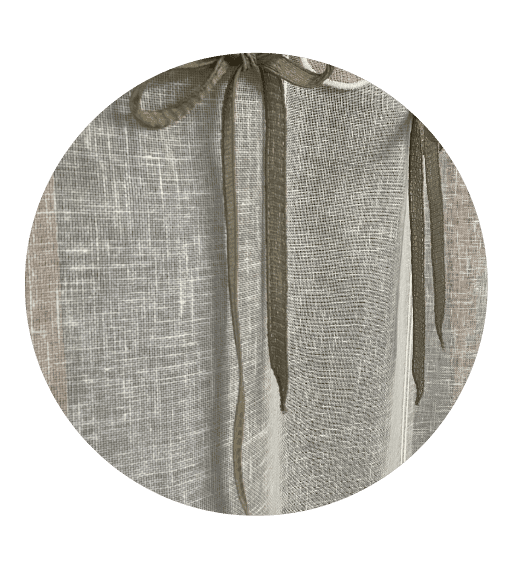




How to choose your sheer curtains based on your window orientation?
.png)
When decorating your home, we often focus on the color or style of the curtains… but we tend to forget a crucial detail: window orientation. Yet, this is a determining factor in making the right choice. Depending on whether your room faces north, south, east, or west, the needs for light, heat, and privacy vary completely. Here is a practical guide to help you see things more clearly.
Why is orientation so important?
A window's orientation directly influences the quantity and quality of natural light it receives throughout the day. A south-facing window will be bathed in sunlight in the middle of the day, while a north-facing window will only catch soft, indirect light. These differences have a concrete impact on:
- The brightness of the room (too much or not enough light?)
- The feeling of warmth (greenhouse effect in summer, coolness in winter)
- Glare (low sun in the morning or evening)
- Privacy (overlooking neighbors depending on the neighborhood and the time of day)
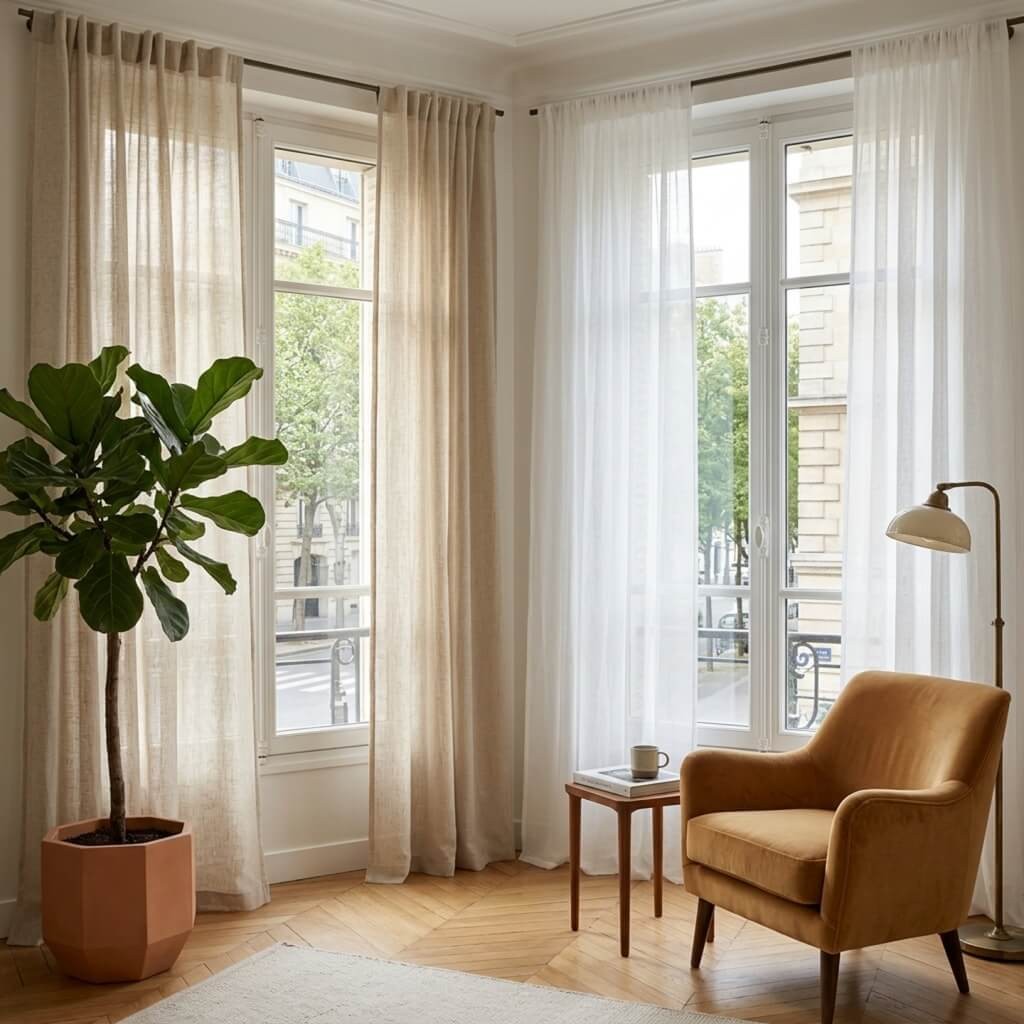
A well-chosen sheer curtain helps balance all these parameters while adding a decorative touch to your windows.
South-facing window: taming intense sunlight
South-facing windows benefit from sunlight for a large part of the day. This is pleasant in winter, but it can quickly become stifling in summer.
Our advice:
- Choose a thick or semi-sheer curtain capable of filtering UV rays without plunging the room into darkness.
- Opt for light colors (white, ecru, natural linen) that reflect heat rather than absorbing it.
- Solar-effect (or "screen") sheer curtains are perfect: they filter brightness and protect your furniture from yellowing without obstructing the view.
- Avoid dark synthetic fabrics, which trap heat.
Tip: Combine your sheer curtain with a thermal blackout curtain for summer nights, and draw it to the side in winter to take full advantage of the sun's warmth.
North-facing window: optimizing natural light
Conversely, north-facing windows receive almost no direct sunlight. The light there is soft and constant, but the room can feel cold and dark.
Our advice:
- Choose a very light and transparent sheer curtain to let in as much light as possible.
- Organza, fine voile, or etamine sheer curtains are ideal: they add lightness without blocking the light.
- Opt for white or very light tones to reflect the existing light indoors.
- Avoid thick or dark fabrics, which would darken the room even further.
Tip: A bright white sheer curtain paired with bright-colored curtains (yellow, terracotta) can give a sense of warmth and light to a north-facing room.
East-facing window: harnessing the morning sun
East-facing windows welcome the rising sun. This is often a popular exposure in bedrooms and kitchens, but the low morning sun can be glaring.
Our advice:
- Opt for a soft-filtering sheer curtain: neither too transparent (to avoid glare upon waking up) nor too thick (so as not to deprive the room of light during the day).
- Light linen or fine cotton sheer curtains are excellent for beautifully diffusing the morning light.
- If it is a bedroom, a slightly thicker or lined sheer curtain might be wise so you don't wake up too early in the summer.
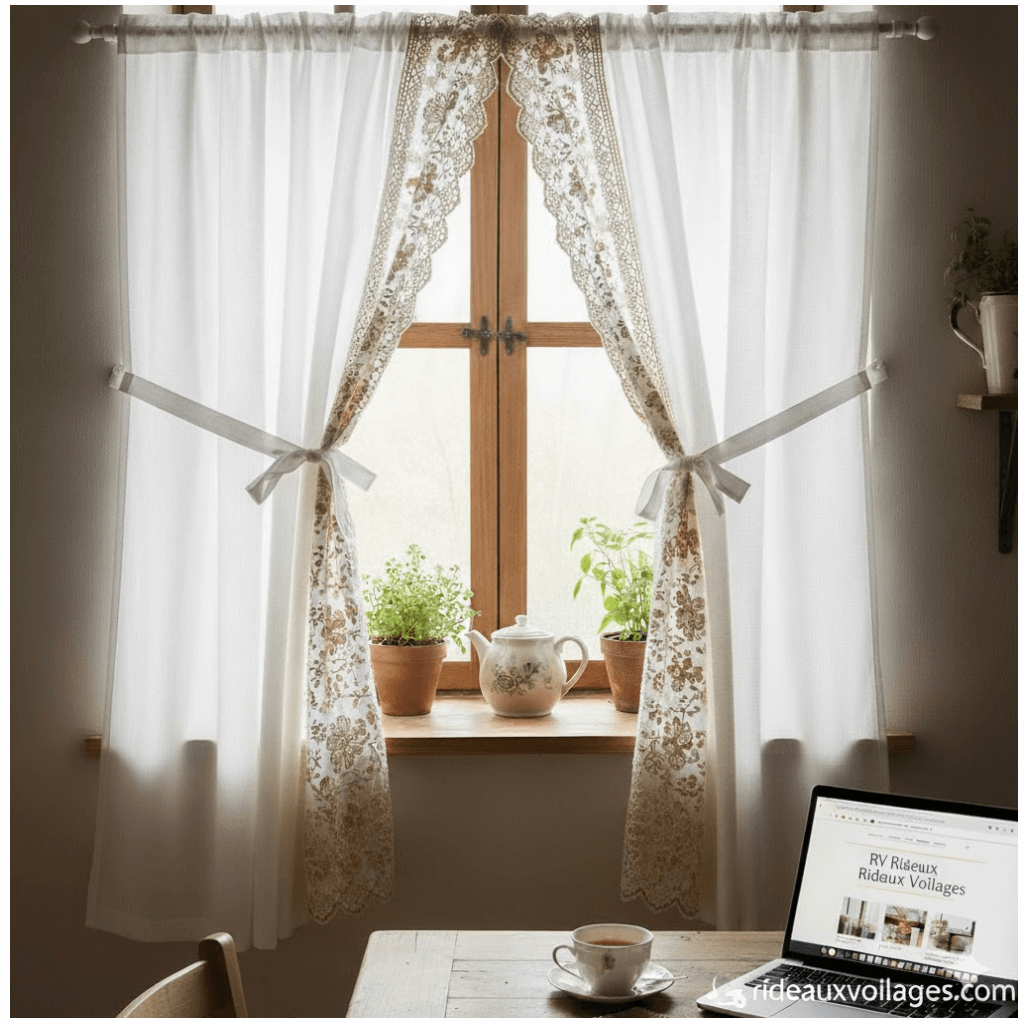
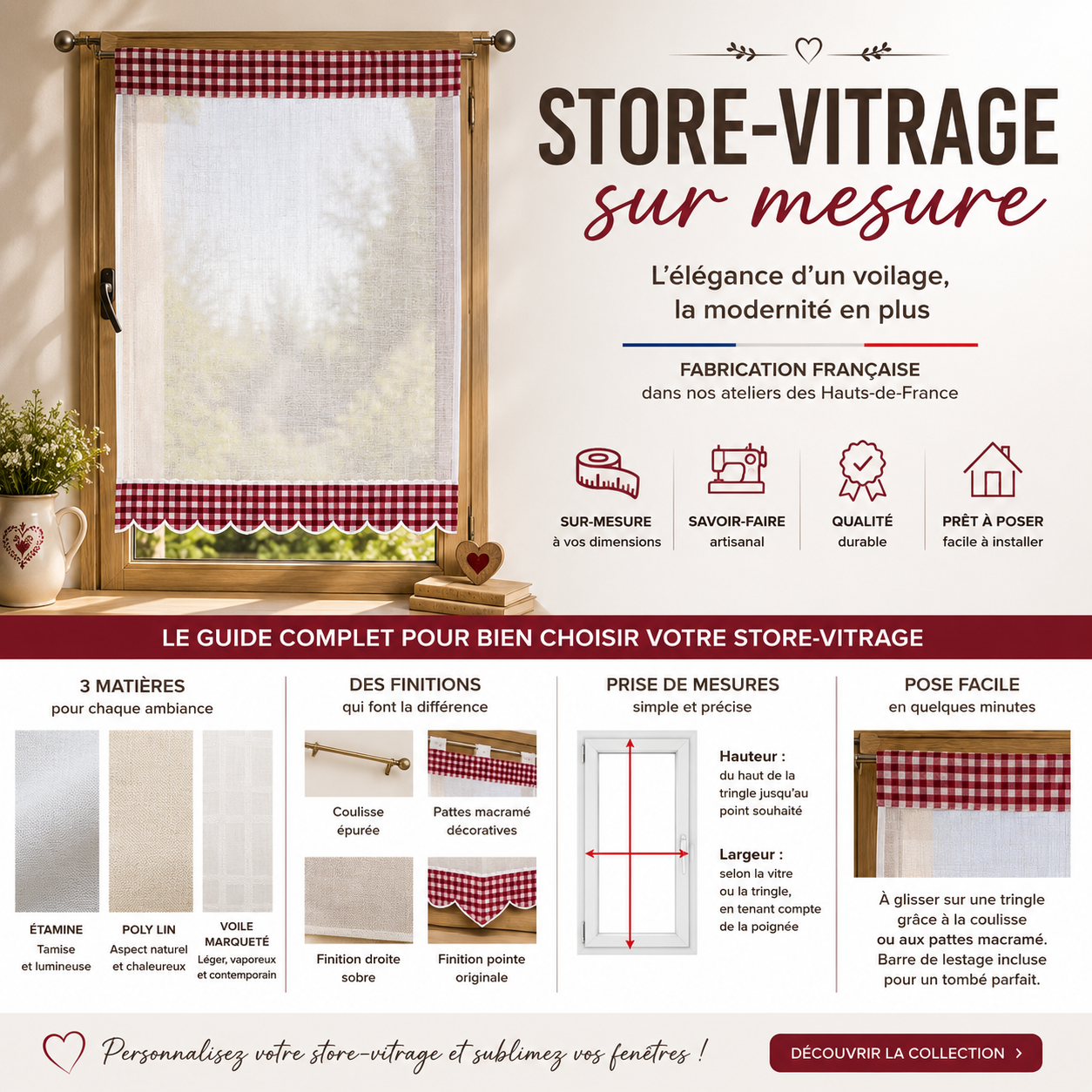
Tip: In an east-facing kitchen or office, a half-height sheer curtain (café curtain) may be enough to filter the morning glare while maintaining beautiful brightness during the day.
West-facing window: protecting against late-day sun
West-facing windows receive sunlight in the late afternoon and evening. The sunshine can be very intense—and the accumulated heat difficult to manage in summer. However, this exposure can make a living room or dining room very pleasant in winter.
Our advice:
- Choose a filtering sheer curtain with good shading power for summer afternoons, without sacrificing aesthetics.
- Dimming sheer curtains made of UV-treated polyester are particularly suitable: they protect furniture and wooden floors from intense sunlight.
- In winter, you can opt for a lighter sheer curtain to enjoy the beautiful sunsets.
Tip: For a west-facing living area, consider a double-curtain system: a light sheer curtain that stays in place, and a thick curtain that you draw only during the summer heat.
In summary: which sheer curtain for which orientation?
- South: strong and prolonged sunlight $\rightarrow$ filtering sheer curtain, light tone
- North: soft and indirect light $\rightarrow$ very light and transparent sheer curtain
- East: low sun in the morning $\rightarrow$ soft-filtering sheer curtain or café curtain
- West: intense sun at the end of the day $\rightarrow$ dimming sheer curtain
In conclusion
Choosing your sheer curtains based on your windows' orientation ensures a comfortable interior in all seasons: neither too hot nor too dark, with just the right amount of light and privacy. Before buying, take the time to observe your room at different hours of the day: you will have a precise idea of your actual needs.
Would you like personalized advice? Browse our catalog of sheer curtains on rideauxvoilages.com or contact our team – we are here to help you find the ideal solution for every room in your home.
Did you find this article helpful? Share it and find all our decorating tips on the cafe-curtains.com blog.